<?xml version="1.0" encoding="UTF-8"?>
<rss version="2.0">
   <channel>
      <title>Published today</title>
      <link>http://www.agu.org/contents/journals/ViewPublishedToday.do</link>
      <description><![CDATA[Published today at AGU]]></description>
      <language>en-us</language>
      <copyright>AGU</copyright>
      <docs>http://blogs.law.harvard.edu/tech/rss</docs>
      <webMaster>webmaster@agu.org</webMaster>
      <item>
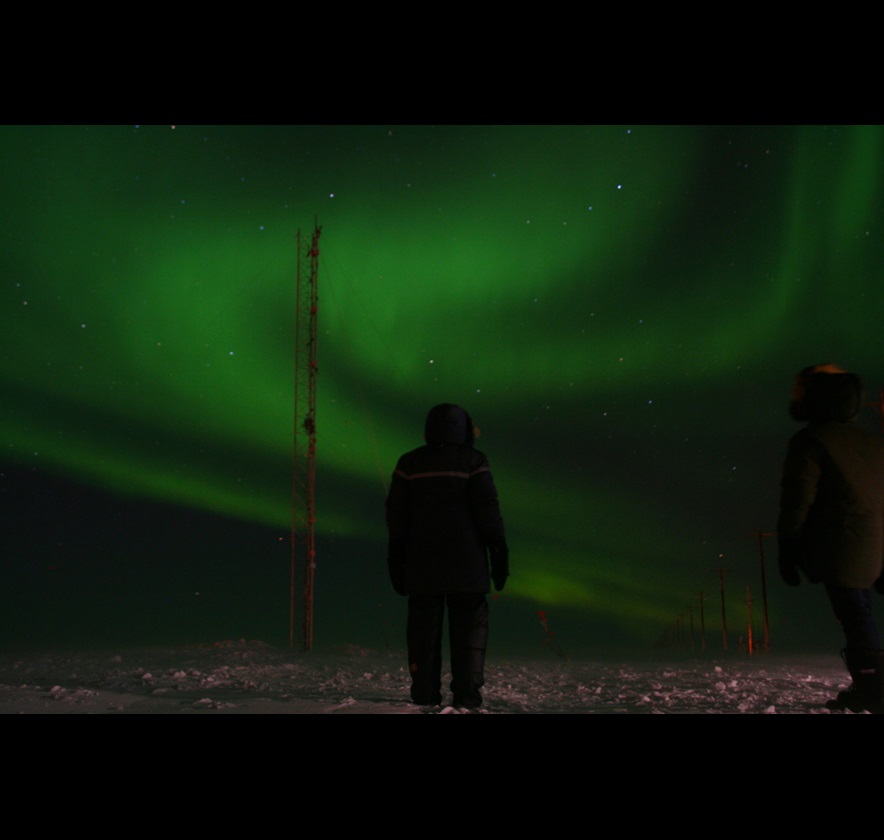
         <title>Spatial-temporal characteristics of flickering aurora as seen by high-speed EMCCD imaging observations</title>
         <link>http://dx.doi.org/10.1029/2010JA016333</link>
         <description><![CDATA[We conducted high-speed imaging observations of flickering aurora at 100 Hz sampling rate using electron multiplying charge-coupled device in Alaska during 2009–2010 winter season. We detected various types of flickering aurora, including drifting and rotating features at a frequency below 15 Hz. We identified, for the first time, flickering stripes and some other unusual flickering events at frequency of higher than 20 Hz on the imaging observations. A dispersion relation derived from a statistical analysis of observed images is compared with the theoretical dispersion curve of O+ electromagnetic ion cyclotron (EMIC) waves. The frequencies and spatial scales calculated from a coherence/phase analysis based on an interference theory are consistent with the wave dispersion relation derived from the statistical analysis, suggesting that the obtained results are essentially consistent with the scenario that the interference of EMIC waves produces the observed dispersion relation of flickering aurora. Furthermore, flickering frequencies higher than 20 Hz are confirmed from our observations, which are higher than expected frequency of O+ EMIC waves at altitudes of several thousand kilometers. We therefore suggest that high-frequency waves such as He+ and H+ EMIC waves may also contribute to produce a significant fraction of flickering aurora.]]></description>
         <author>Ayumi Yaegashi, Takeshi Sakanoi, Ryuho Kataoka, Kazushi Asamura, Yoshizumi Miyoshi, Mitsuteru Sato and Shoichi Okano</author>
         <category>Journal of Geophysical Research</category>
         <pubDate>116</pubDate>
      </item>
      <item>
         <title>Current sheets in the heliosheath: Voyager 1, 2009</title>
         <link>http://dx.doi.org/10.1029/2010JA016309</link>
         <description><![CDATA[We identified all of the current sheets for which we have relatively complete and accurate magnetic field (B) data from Voyager 1 (V1) from days of year (DOYs) 1 to 331, 2009, which were obtained deep in the heliosheath between 108.5 and 111.8 AU. Three types of current sheets were found: (1) 15 proton boundary layers (PBLs), (2) 10 and 3 magnetic holes and magnetic humps, respectively, and (3) 3 sector boundaries. The magnetic field strength changes across PBL, and the profile B(t) is linearly related to the hyperbolic tangent function, but the direction of B does not change. For each of the three sector boundaries, B rotated in a plane normal to the minimum variance direction, and the component of B along the minimum variance direction was zero within the uncertainties, indicating that the sector boundaries were tangential discontinuities. The structure of the sector boundaries was not as simple as that for PBLs. The average thickness of magnetic holes and humps (∼30 RL) was twice that of the PBLs (∼15 RL). The average thickness of the current sheets associated with sector boundaries was close to the thickness of the PBLs. Our observations are consistent with the hypothesis that magnetic holes and humps are solitons, which are initiated by the mirror mode instability, and evolve by nonlinear kinetic plasma processes to pressure balanced structures maintained by magnetization currents and proton drift currents in the gradients of B.]]></description>
         <author>L. F. Burlaga and N. F. Ness</author>
         <category>Journal of Geophysical Research</category>
         <pubDate>116</pubDate>
      </item>
      <item>
         <title>TC-1 observations of a flux rope: Generation by multiple X line reconnection</title>
         <link>http://dx.doi.org/10.1029/2010JA015986</link>
         <description><![CDATA[On 29 December 2004 the Double Star TC-1 satellite most probably stays close to a reconnection line for about 20 min. The direction of the X line can be evaluated according to the component merging model. During the time of observations, TC-1 also detects a flux transfer event (FTE). It is found that the FTE axis is parallel to such an X line. This observation is more in favor of the single X line and the multiple X lines FTE models, rather than the original Russell and Elphic model. Moreover, particular features of the ion distribution functions and the plasma behavior near the FTE seem to be more consistent with a multiple X line generation mechanism. The period under study is characterized by a large and negative Earth's dipole tilt, and the reconnection line close to TC-1 is found to follow the magnetic equator, passing northward of the subsolar/stagnation point. These facts lead to speculate that the FTE is generated when a secondary X line, probably passing through the subsolar/stagnation point and with approximately the same orientation of the X line near TC-1, is activated southward of TC-1.]]></description>
         <author>L. Trenchi, M. F. Marcucci, H. Rème, C. M. Carr and J. B. Cao</author>
         <category>Journal of Geophysical Research</category>
         <pubDate>116</pubDate>
      </item>
      <item>
         <title>Auroral electron distributions within and close to the Saturn kilometric radiation source region</title>
         <link>http://dx.doi.org/10.1029/2011JA016461</link>
         <description><![CDATA[On 17 October 2008, Cassini observed for the first time the electron populations associated with the crossing of a Saturn kilometric radiation source region and its surroundings. These observations allow for the first time the constraint and quantification of the high-latitude acceleration processes, the current systems, and the origin of the low-frequency electromagnetic waves. Enhanced fluxes of field-aligned energetic electrons were measured by the Cassini electron plasma spectrometer in conjunction with unusual intense field-aligned current systems identified using the magnetometer instrument. In the region where downward field-aligned currents were measured, electron data show evidence of two types of upward accelerated electron beams: a broadband energetic (1–100 keV) electron population that is observed throughout the region and a narrow-banded (0.1–1 keV) electron population that is observed sporadically. In the regions where the magnetic field signatures showed evidence for upward field-aligned currents, we observe electron loss cone distributions and some evidence of shell-like distributions. Such nonthermal electron populations are commonly known as a potential free energy source to drive plasma instabilities. In the downward current region, the low-energy and energetic beams are likely the source of the very low frequency emissions. In the upward current region, the shell distribution is identified as a potential source for Saturn kilometric radiation generation via the cyclotron maser instability.]]></description>
         <author>P. Schippers, C. S. Arridge, J. D. Menietti, D. A. Gurnett, L. Lamy, B. Cecconi, D. G. Mitchell, N. André, W. S. Kurth, S. Grimald, M. K. Dougherty, A. J. Coates, N. Krupp and D. T. Young</author>
         <category>Journal of Geophysical Research</category>
         <pubDate>116</pubDate>
      </item>
      <item>
         <title>Three-dimensional, multifluid, high spatial resolution MHD model studies of the solar wind interaction with Mars</title>
         <link>http://dx.doi.org/10.1029/2010JA016272</link>
         <description><![CDATA[Our newly developed 3-D, multifluid MHD model is used to study the interaction of the solar wind with Mars. This model is based on the BATS-R-US code, using a spherical grid and a radial resolution equal to 10 km in the ionospheric regions. We solve separate continuity, momentum, and energy equations for each ion fluid and run our model for both solar minimum and maximum conditions. We obtain asymmetric densities, velocities, and magnetic pileup in the plane containing both the direction of the solar wind and the convective electric field. These asymmetries are the result of the decoupling of the individual ions; therefore, our model is able to account for the respective dynamics of the ions and to show new physical processes that could not be observed by the single-fluid model. Our results are consistent with the measured bow shock and magnetic pileup locations and with the Viking-observed ion densities. We also compute the escape fluxes for both solar minimum and solar maximum conditions and compare them to the single-fluid results and the observed values from Mars Express.]]></description>
         <author>Dalal Najib, Andrew F. Nagy, Gábor Tóth and Yingjuan Ma</author>
         <category>Journal of Geophysical Research</category>
         <pubDate>116</pubDate>
      </item>
      <item>
         <title>Decay of polar cap patch</title>
         <link>http://dx.doi.org/10.1029/2010JA016297</link>
         <description><![CDATA[We report an event in which a polar cap patch was detected with an all-sky imager (ASI) at Resolute Bay, Canada (74.73° N, 265.07° E; AACGM latitude 82.9°), on the nightside. The patch stopped its antisunward motion associated with a northward turning of interplanetary magnetic field and stayed within the field of view of the ASI for more than 1 h. When the patch stagnated, its luminosity decreased gradually, which allows us to investigate how the patch plasma decayed in a quantitative manner. The decay of the patch can be quantitatively explained by the loss through recombinations of O+ with ambient N2 and O2 molecules, if we assume the altitude of the optical patch to be around 295 km. The derived altitude of the patch around 295 km is much higher than the nominal value at 235 km obtained from the MSIS-E90 and IRI-2007 models, indicating that climatological models such as IRI are not suitable for describing the actual density profile of patches. This is probably because the loss process was much faster in the lower-altitude part of the patch; thus, the peak altitude of the patch increased as it traveled across the polar cap because of rapid recombination at the bottomside of the F region. This suggests that we should employ higher emission altitude when we investigate optical patches transported deep into the nightside polar cap. Such information is important when we compare the optical data with other instruments such as coherent radars and GPS scintillation measurements by mapping the all-sky image on the geographic coordinate system with an assumption of the patch emission altitude.]]></description>
         <author>K. Hosokawa, J. I. Moen, K. Shiokawa and Y. Otsuka</author>
         <category>Journal of Geophysical Research</category>
         <pubDate>116</pubDate>
      </item>
      <item>
         <title>Characteristics of nighttime medium-scale traveling ionospheric disturbances observed over Alaska</title>
         <link>http://dx.doi.org/10.1029/2010JA016212</link>
         <description><![CDATA[We focused on propagating wave-like structures which frequently appeared in the O I 630.0 nm airglow images obtained by an all-sky imager installed at Poker Flat Research Range (65.1°N, 147.4°W, magnetic latitude 65.6°) in Alaska. These events are classified as medium-scale traveling ionospheric disturbances (MSTIDs) on the basis of the wavelength and propagating speed. The unique points of our observation are (1) the two-dimensional structures of MSTIDs in the subauroral region are revealed; (2) the horizontal direction of the electric field can be estimated from the motion of the Evening Co-rotating Patch (ECP) aurora appearing simultaneously; and (3) neutral winds are simultaneously observed by a Fabry-Perot spectrometer. Statistical study of these MSTID events from November 2001 to April 2002 indicates the following characteristics. The MSTIDs were observed almost every evening, and sometimes in the morning, but were not observed at midnight. Typical propagating speed, direction, and wavelength of the wave phenomena were about 135 m/s, southwestward, and about 250 km, respectively. When the MSTIDs appeared, northward neutral winds and westward plasma drifts were dominant. This indicates that the Perkins instability does not contribute to the development of MSTIDs in the Alaska region. The vertical wavelength analysis using the dispersion relation of gravity waves with the observed wave parameters and background winds suggests that the observed MSTIDs over Alaska are the atmospheric gravity waves (AGWs). As a case study, temporal variation of an MSTID event on 21 December 2001 is shown. Results of a ray tracing analysis of this event suggest that the AGWs come from the equatorward edge of the auroral oval.]]></description>
         <author>Minoru Kubota, Mark Conde, Mamoru Ishii, Yasuhiro Murayama and Hidekatsu Jin</author>
         <category>Journal of Geophysical Research</category>
         <pubDate>116</pubDate>
      </item>
      <item>
         <title>In situ measurements of tropospheric volcanic plumes in Ecuador and Colombia during TC4</title>
         <link>http://dx.doi.org/10.1029/2010JD014718</link>
         <description><![CDATA[A NASA DC-8 research aircraft penetrated tropospheric gas and aerosol plumes sourced from active volcanoes in Ecuador and Colombia during the Tropical Composition, Cloud and Climate Coupling (TC4) mission in July–August 2007. The likely source volcanoes were Tungurahua (Ecuador) and Nevado del Huila (Colombia). The TC4 data provide rare insight into the chemistry of volcanic plumes in the tropical troposphere and permit a comparison of SO2 column amounts measured by the Ozone Monitoring Instrument (OMI) on the Aura satellite with in situ SO2 measurements. Elevated concentrations of SO2, sulfate aerosol, and particles were measured by DC-8 instrumentation in volcanic outflow at altitudes of 3–6 km. Estimated plume ages range from ∼2 h at Huila to ∼22–48 h downwind of Ecuador. The plumes contained sulfate-rich accumulation mode particles that were variably neutralized and often highly acidic. A significant fraction of supermicron volcanic ash was evident in one plume. In-plume O3 concentrations were ∼70%–80% of ambient levels downwind of Ecuador, but data are insufficient to ascribe this to O3 depletion via reactive halogen chemistry. The TC4 data record rapid cloud processing of the Huila volcanic plume involving aqueous-phase oxidation of SO2 by H2O2, but overall the data suggest average in-plume SO2 to sulfate conversion rates of ∼1%–2% h−1. SO2 column amounts measured in the Tungurahua plume (∼0.1–0.2 Dobson units) are commensurate with average SO2 columns retrieved from OMI measurements in the volcanic outflow region in July 2007. The TC4 data set provides further evidence of the impact of volcanic emissions on tropospheric acidity and oxidizing capacity.]]></description>
         <author>S. A. Carn, K. D. Froyd, B. E. Anderson, P. Wennberg, J. Crounse, K. Spencer, J. E. Dibb, N. A. Krotkov, E. V. Browell, J. W. Hair, G. Diskin, G. Sachse and S. A. Vay</author>
         <category>Journal of Geophysical Research</category>
         <pubDate>116</pubDate>
      </item>
      <item>
         <title>Understanding three-dimensional effects in polarized observations with the ground-based ADMIRARI radiometer during the CHUVA campaign</title>
         <link>http://dx.doi.org/10.1029/2010JD015335</link>
         <description><![CDATA[Measurements of down-welling microwave radiation from raining clouds performed with the Advanced Microwave Radiometer for Rain Identification (ADMIRARI) radiometer at 10.7–21–36.5 GHz during the Global Precipitation Measurement Ground Validation “Cloud processes of the main precipitation systems in Brazil: A contribution to cloud resolving modeling and to the Global Precipitation Measurement” (CHUVA) campaign held in Brazil in March 2010 represent a unique test bed for understanding three-dimensional (3D) effects in microwave radiative transfer processes. While the necessity of accounting for geometric effects is trivial given the slant observation geometry (ADMIRARI was pointing at a fixed 30° elevation angle), the polarization signal (i.e., the difference between the vertical and horizontal brightness temperatures) shows ubiquitousness of positive values both at 21.0 and 36.5 GHz in coincidence with high brightness temperatures. This signature is a genuine and unique microwave signature of radiation side leakage which cannot be explained in a 1D radiative transfer frame but necessitates the inclusion of three-dimensional scattering effects. We demonstrate these effects and interdependencies by analyzing two campaign case studies and by exploiting a sophisticated 3D radiative transfer suited for dichroic media like precipitating clouds.]]></description>
         <author>Alessandro Battaglia, Pablo Saavedra, Carlos Augusto Morales and Clemens Simmer</author>
         <category>Journal of Geophysical Research</category>
         <pubDate>116</pubDate>
      </item>
      <item>
         <title>Compositional diversity and geologic insights of the Aristarchus crater from Moon Mineralogy Mapper data</title>
         <link>http://dx.doi.org/10.1029/2010JE003726</link>
         <description><![CDATA[The Moon Mineralogy Mapper (M3) acquired high spatial and spectral resolution data of the Aristarchus Plateau with 140 m/pixel in 85 spectral bands from 0.43 to 3.0 μm. The data were collected as radiance and converted to reflectance using the observational constraints and a solar spectrum scaled to the Moon-Sun distance. Summary spectral parameters for the area of mafic silicate 1 and 2 μm bands were calculated from the M3 data and used to map the distribution of key units that were then analyzed in detail with the spectral data. This analysis focuses on five key compositional units in the region. (1) The central peaks are shown to be strongly enriched in feldspar and are likely from the upper plagioclase-rich crust of the Moon. (2) The impact melt is compositionally diverse with clear signatures of feldspathic crust, olivine, and glass. (3) The crater walls and ejecta show a high degree of spatial heterogeneity and evidence for massive breccia blocks. (4) Olivine, strongly concentrated on the rim, wall, and exterior of the southeastern quadrant of the crater, is commonly associated the impact melt. (5) There are at least two types of glass deposits observed: pyroclastic glass and impact glass.]]></description>
         <author>John F. Mustard, Carle M. Pieters, Peter J. Isaacson, James W. Head, Sebastien Besse, Roger N. Clark, Rachel L. Klima, Noah E. Petro, Matthew I. Staid, Jessica M. Sunshine, Cassandra J. Runyon and Stefanie Tompkins</author>
         <category>Journal of Geophysical Research</category>
         <pubDate>116</pubDate>
      </item>
      <item>
         <title>Winter and spring evolution of northern seasonal deposits on Mars from OMEGA on Mars Express</title>
         <link>http://dx.doi.org/10.1029/2010JE003762</link>
         <description><![CDATA[The OMEGA visible/near-infrared imaging spectrometer on Mars Express has observed the retreat of the northern seasonal deposits during Martian year 27–28 from the period of maximum extension, close to the northern winter solstice, to the end of the retreat at Ls 95°. We present the temporal and spatial distributions of both CO2 and H2O ices and propose a scenario that describes the winter and spring evolution of the northern seasonal deposits. During winter, the CO2-rich condensates are initially transparent and could be in slab form. A water ice annulus surrounds the sublimating CO2 ice, extending over 6° of latitude at Ls 320°, decreasing to 2° at Ls 350°, and gradually increasing to 4.5° at Ls 50°. This annulus first consists of thin frost as observed by the Viking Lander 2 and is then overlaid by H2O grains trapped in the CO2-rich ice layer and released during CO2 sublimation. By Ls 50°, H2O ice spectrally dominates most of the deposits. In order to hide the still several tens of centimeters thick CO2 ice layer in central areas of the cap we propose the buildup of an optically thick top layer of H2O ice from ice grains previously embedded in the CO2 ice and by cold trapping of water vapor from the sublimating water ice annulus. The CO2 ice signature locally reappears between Ls 50° and 70°. What emerges from our observations is a very active surface-atmosphere water cycle. These data provide additional constraints to the general circulation models simulating the Martian climate.]]></description>
         <author>T. Appéré, B. Schmitt, Y. Langevin, S. Douté, A. Pommerol, F. Forget, A. Spiga, B. Gondet and J.-P. Bibring</author>
         <category>Journal of Geophysical Research</category>
         <pubDate>116</pubDate>
      </item>
      <item>
         <title>Ecological information and water mass properties in the Mediterranean recorded by stable isotope ratios in Pinna nobilis shells</title>
         <link>http://dx.doi.org/10.1029/2010JG001461</link>
         <description><![CDATA[Sclerochronologic and stable isotope records in Pinna nobilis shells potentially record ecological and oceanographic information. P. nobilis is a subtidal bivalve adapted to live in a variety of environments in the Mediterranean. We hypothesized that stable isotope ratios (δ18O and δ13C) and growth increment patterns from individuals living in different environments serve as ecological indicators. Using a new methodology for calcite sampling, we (1) identified annual growth features (nacre tongues) and (2) compared monthly resolved variations in δ18O and δ13C values and calcification temperatures recorded in animals located above and below the thermocline (16 and 30 m depth). The specimens from 16 m showed more negative δ18O values than the specimen from 30 m, likely reflecting differences in salinity. The specimens from 30 m recorded δ13C values less positive than the specimens from 16 m, which we interpreted as an ontogenetic effect observed in previous studies. Estimated calcification temperatures were offset relative to measured water temperature by ∼6.1°C (∼1.4‰). This finding is evident in earlier proxy studies of P. nobilis, although it was not discussed in those studies. Using the seasonal pattern of δ18O and δ13C values, we demonstrated that nacre tongues are deposited annually and that their formation is independent of temperature. Food availability rather than temperature may control nacre tongue formation. An alternative explanation for nacre tongue formation is gonad maturation during spring. Our findings support the idea that sclerochronology in P. nobilis can be used to reconstruct environmental, ecological, and climate archives of the Mediterranean.]]></description>
         <author>Jose Rafael García-March, Donna Surge, Jonathan M. Lees and Diego K. Kersting</author>
         <category>Journal of Geophysical Research</category>
         <pubDate>116</pubDate>
      </item>
      <item>
         <title>Statistics between mainshocks and foreshocks in Italy and Southern California</title>
         <link>http://dx.doi.org/10.1029/2011GL047165</link>
         <description><![CDATA[The most used and accepted models for daily forecasts are based on short-term space and time earthquake clustering for occurrence rates and on the Gutenberg-Richter law for the frequency-magnitude. These models have been demonstrated to produce reliable prospective space-time-magnitude forecasts during an aftershock sequence, but their skill in forecasting mainshocks is still under discussion. This paper studies the foreshock statistics of the Italian and Californian seismicity in two ways: i) we compare the foreshock activity observed in real seismic catalogs and in synthetic catalogs derived from a pure Epidemic-Type Aftershock Sequence (ETAS) model; ii) we analyze the triggering capability of earthquakes using different ETAS parameterizations, in order to check whether large events are triggered in the same way as regular earthquakes. The results indicate that the foreshock activity observed in the real catalogs is compatible with what is expected by the ETAS model. Moreover, we find that the empirical foreshock rates have an intrinsic variability due to limited sampling that may explain most of the differences found so far in different seismic catalogs.]]></description>
         <author>Warner Marzocchi and Jiancang Zhuang</author>
         <category>Geophysical Research Letters</category>
         <pubDate>38</pubDate>
      </item>
      <item>
         <title>Migration properties of non-volcanic tremor in Shikoku, southwest Japan</title>
         <link>http://dx.doi.org/10.1029/2011GL047110</link>
         <description><![CDATA[Based on the precise locations of deep non-volcanic tremor in southwest Japan, which show a depth-dependent behavior, we clarified characteristic properties of tremor migration. Major tremor swarms are mainly initiated at deep levels of the tremor zone, corresponding to areas of frequent minor tremor, and migrate up-dip along the subduction interface. In central and eastern Shikoku, tremor occurs in two clusters, separated by a small gap, with the timing of tremor activity in the clusters differing by 1 or 2 days. The time evolution of tremor activity in western Shikoku reveals that the migration front of tremor propagates continuously and radially, even in the case of a tremor gap. These findings indicate that the rupture front of slow slip events propagates continuously and radially from the deep levels through the area without tremor activity. The occurrence of tremor may depend on the existence of inhomogeneous patches upon the plate interface.]]></description>
         <author>Kazushige Obara, Takanori Matsuzawa, Sachiko Tanaka, Takeshi Kimura and Takuto Maeda</author>
         <category>Geophysical Research Letters</category>
         <pubDate>38</pubDate>
      </item>
      <item>
         <title>Pollution from China increases cloud droplet number, suppresses rain over the East China Sea</title>
         <link>http://dx.doi.org/10.1029/2011GL047235</link>
         <description><![CDATA[Rapid economic growth over the last 30 years in China has led to a significant increase in aerosol loading, which is mainly due to the increased emissions of its precursors such as SO2 and NOx. Here we show that these changes significantly affect wintertime clouds and precipitation over the East China Sea downwind of major emission sources. Satellite observations show an increase of cloud droplet number concentration from less than 200 cm−3 in the 1980s to more than 300 cm−3 in 2005. In the same time period, precipitation frequency reported by voluntary ship observers was reduced from more than 30% to less than 20% of the time. A back trajectory analysis showed the pollution in the investigation area to originate from the Shanghai-Nanjing and Jinan industrial areas. A model sensitivity study was performed, isolating the effects of changes in emissions of the aerosol precursors SO2 and NOx on clouds and precipitation using a state-of-the-art mesocale model including chemistry and aerosol indirect effects. Similar changes in cloud droplet number concentration over the East China Sea were obtained when the current industrial emissions in China were reduced to the 1980s levels. Simulated changes in precipitation were somewhat smaller than the observed changes but still significant.]]></description>
         <author>Ralf Bennartz, Jiwen Fan, John Rausch, L. Ruby Leung and Andrew K. Heidinger</author>
         <category>Geophysical Research Letters</category>
         <pubDate>38</pubDate>
      </item>
      <item>
         <title>Subterranean CO2 ventilation and its role in the net ecosystem carbon balance of a karstic shrubland</title>
         <link>http://dx.doi.org/10.1029/2011GL047077</link>
         <description><![CDATA[Recent studies of carbonate ecosystems suggest a possible contribution of subterranean ventilation to the net ecosystem carbon balance. However, both the overall importance of such CO2 exchange processes and their drivers remain unknown. Here we analyze several dry-season episodes of net CO2 emissions to the atmosphere, along with soil and borehole CO2 measurements. Results highlight important events where rapid decreases of underground CO2 molar fractions correlate well with sizeable CO2 release to the atmosphere. Such events, with high friction velocities, are attributed to ventilation processes, and should be accounted for by predictive models of surface CO2 exchange.]]></description>
         <author>E. P. Sanchez-Cañete, P. Serrano-Ortiz, A. S. Kowalski, C. Oyonarte and F. Domingo</author>
         <category>Geophysical Research Letters</category>
         <pubDate>38</pubDate>
      </item>
      <item>
         <title>Zircon effect alone insufficient to generate seawater Nd-Hf isotope relationships</title>
         <link>http://dx.doi.org/10.1029/2010GC003363</link>
         <description><![CDATA[Many studies have suggested that continental weathering inputs have controlled the dissolved oceanic budget of hafnium (Hf). However, whether the offset of seawater Nd-Hf isotope compositions from the terrestrial array can be fully generated by incongruent weathering of continental rocks (the zircon effect) is still not well constrained. In recent years, an increasing amount of combined U-Pb ages and Hf-isotopic compositions of riverine detrital zircons have been published. Here a new model of the Nd-Hf isotopic compositions of the weathered zircon-free part of the upper continental crust is presented, which is based on published Hf isotope compositions and formation ages of modern riverine detrital zircons combined with Nd isotopic compositions of rocks from the upper continental crust. Our model results indicate that the Nd-Hf isotopic composition of the weathered zircon-free part of the upper continental crust is not consistent with the seawater isotopic compositions. This suggests that the elevated seawater Hf isotope compositions for given Nd isotope compositions cannot be fully explained by incongruent zircon weathering of the continents, which is also supported by a recent study demonstrating incongruent weathering of other minerals than zircon.]]></description>
         <author>Tian-Yu Chen, Hong-Fei Ling, Martin Frank, Kui-Dong Zhao and Shao-Yong Jiang</author>
         <category>Geochemistry Geophysics Geosystems</category>
         <pubDate>12</pubDate>
      </item>
      <item>
         <title>Hydroclimatic influences on seasonal and spatial cholera transmission cycles: Implications for public health intervention in the Bengal Delta</title>
         <link>http://dx.doi.org/10.1029/2010WR009914</link>
         <description><![CDATA[Cholera remains a major public health threat in many developing countries around the world. The striking seasonality and annual recurrence of this infectious disease in endemic areas remain of considerable interest to scientists and public health workers. Despite major advances in the ecological and microbiological understanding of Vibrio cholerae, the causative agent of the disease, the role of underlying large-scale hydroclimatic processes in propagating the disease for different seasons and spatial locations is not well understood. Here we show that the cholera outbreaks in the Bengal Delta region are propagated from the coastal to the inland areas and from spring to fall by two distinctly different transmission cycles, premonsoon and postmonsoon, influenced by coastal and terrestrial hydroclimatic processes, respectively. A coupled analysis of the regional hydroclimate and cholera incidence reveals a strong association of the space-time variability of incidence peaks with seasonal processes and extreme climatic events. We explain how the asymmetric seasonal hydroclimatology affects regional cholera dynamics by providing a coastal growth environment for bacteria in spring, while propagating the disease to fall by monsoon flooding. Our findings may serve as the basis for “climate-informed” early warnings and for prompting effective means for intervention and preempting epidemic cholera outbreaks in vulnerable regions.]]></description>
         <author>Ali Shafqat Akanda, Antarpreet S. Jutla, Munirul Alam, Guillaume Constantin de Magny, A. Kasem Siddique, R. Bradley Sack, Anwar Huq, Rita R. Colwell and Shafiqul Islam</author>
         <category>Water Resources Research</category>
         <pubDate>47</pubDate>
      </item>
      <item>
         <title>Impact of temporal data resolution on parameter inference and model identification in conceptual hydrological modeling: Insights from an experimental catchment</title>
         <link>http://dx.doi.org/10.1029/2010WR009525</link>
         <description><![CDATA[This study presents quantitative and qualitative insights into the time scale dependencies of hydrological parameters, predictions and their uncertainties, and examines the impact of the time resolution of the calibration data on the identifiable system complexity. Data from an experimental basin (Weierbach, Luxembourg) is used to analyze four conceptual models of varying complexity, over time scales of 30 min to 3 days, using several combinations of numerical implementations and inference equations. Large spurious time scale trends arise in the parameter estimates when unreliable time-stepping approximations are employed and/or when the heteroscedasticity of the model residual errors is ignored. Conversely, the use of robust numerics and more adequate (albeit still clearly imperfect) likelihood functions markedly stabilizes and, in many cases, reduces the time scale dependencies and improves the identifiability of increasingly complex model structures. Parameters describing slow flow remained essentially constant over the range of subhourly to daily scales considered here, while parameters describing quick flow converged toward increasingly precise and stable estimates as the data resolution approached the characteristic time scale of these faster processes. These results are consistent with theoretical expectations based on numerical error analysis and data-averaging considerations. Additional diagnostics confirmed the improved ability of the more complex models to reproduce distinct signatures in the observed data. More broadly, this study provides insights into the information content of hydrological data and, by advocating careful attention to robust numericostatistical analysis and stringent process-oriented diagnostics, furthers the utilization of dense-resolution data and experimental insights to advance hypothesis-based hydrological modeling at the catchment scale.]]></description>
         <author>Dmitri Kavetski, Fabrizio Fenicia and Martyn P. Clark</author>
         <category>Water Resources Research</category>
         <pubDate>47</pubDate>
      </item>
      <item>
         <title>A divide and conquer approach to cope with uncertainty, human health risk, and decision making in contaminant hydrology</title>
         <link>http://dx.doi.org/10.1029/2010WR009954</link>
         <description><![CDATA[Assessing health risk in hydrological systems is an interdisciplinary field. It relies on the expertise in the fields of hydrology and public health and needs powerful translation concepts to provide decision support and policy making. Reliable health risk estimates need to account for the uncertainties and variabilities present in hydrological, physiological, and human behavioral parameters. Despite significant theoretical advancements in stochastic hydrology, there is still a dire need to further propagate these concepts to practical problems and to society in general. Following a recent line of work, we use fault trees to address the task of probabilistic risk analysis and to support related decision and management problems. Fault trees allow us to decompose the assessment of health risk into individual manageable modules, thus tackling a complex system by a structural divide and conquer approach. The complexity within each module can be chosen individually according to data availability, parsimony, relative importance, and stage of analysis. Three differences are highlighted in this paper when compared to previous works: (1) The fault tree proposed here accounts for the uncertainty in both hydrological and health components, (2) system failure within the fault tree is defined in terms of risk being above a threshold value, whereas previous studies that used fault trees used auxiliary events such as exceedance of critical concentration levels, and (3) we introduce a new form of stochastic fault tree that allows us to weaken the assumption of independent subsystems that is required by a classical fault tree approach. We illustrate our concept in a simple groundwater-related setting.]]></description>
         <author>Felipe P. J. de Barros, Diogo Bolster, Xavier Sanchez-Vila and Wolfgang Nowak</author>
         <category>Water Resources Research</category>
         <pubDate>47</pubDate>
      </item>
   </channel>
</rss>