About
A network of institutions, formed so US science stays at the table
The US Academic Alliance for the IPCC brings together universities and colleges that are registered IPCC observers — nominating experts, funding participation, and supporting a community of practice.
Our mission
To enable robust participation of US and US-based scientists, experts, and academic institutions in the work of the Intergovernmental Panel on Climate Change (IPCC).
What we set out to do
Four goals guide our work
01
Get US experts nominated & selected
Facilitate the nomination, selection, and participation of diverse US and US-based scientists and experts in numbers that reflect the scale and diversity of US contributions to relevant fields of knowledge.
02
Make IPCC science visible
Make the IPCC’s activities, findings, and outputs accessible to scientific, higher-education, governmental, media, and general audiences in the US.
03
Promote reports as authoritative
Engage policymakers, researchers, educators, and media to use IPCC reports as credible, peer-reviewed sources for research, teaching, and policy.
04
Support a community of practice
Provide a framework and virtual platform for a community of practice for US participants in the work of the IPCC.

How the Alliance formed

A response, built by institutions

The USAA-IPCC, hosted by the American Geophysical Union (AGU), was established in March 2025 by a network of universities and colleges that are registered observers of the IPCC.

It formed in response to federal decisions to end support for US participation in IPCC activities and to withdraw the US from the IPCC — just as the panel began preparing for its 7th Assessment Report (AR7). Limited US participation risked keeping recent US climate research out of AR7 and weakening the reports’ value for policymaking. The Alliance remains active — funding participants’ travel, nominating experts for special reports and expert meetings, facilitating reviews of draft reports, and supporting a community of practice.

Members

Member institutions

Member institutions hold official IPCC Observer Organization status, enabling them to nominate experts directly.

What is the IPCC?

The world’s authority on climate science

The Intergovernmental Panel on Climate Change is a United Nations body that assesses the science of climate change, its risks for people and the planet, and options for managing them. Its reports inform climate policy at every level of government and international negotiations under the UNFCCC.

Reports are written by international teams of hundreds of volunteer experts, nominated by governments and observer organizations and selected by the IPCC Bureau. Each goes through multiple rounds of open, transparent review before member nations accept it.


Steering committee
Guided by the member institutions
Representatives of the member institutions guide the Alliance’s work.
Greg Drozd
Greg Drozd
Assoc. Prof. of Chemistry, Colby College
Mark Shimamoto
Mark Shimamoto
VP for Global Outreach & Partnerships, AGU
Doreen Stabinsky
Doreen Stabinsky
Prof. of Global Environmental Politics, College of the Atlantic
Beth Martin
Beth Martin
Teaching Prof. in Environmental Studies, Washington University in St. Louis
Julie Zimmerman
Julie Zimmerman
Vice Provost for Planetary Solutions, Yale University
Michael Oppenheimer
Michael Oppenheimer
Milbank Prof. of Geosciences & Intl. Affairs, Princeton University
Jessica O’Reilly
Jessica O’Reilly
Assoc. Prof. of International Studies, Indiana University
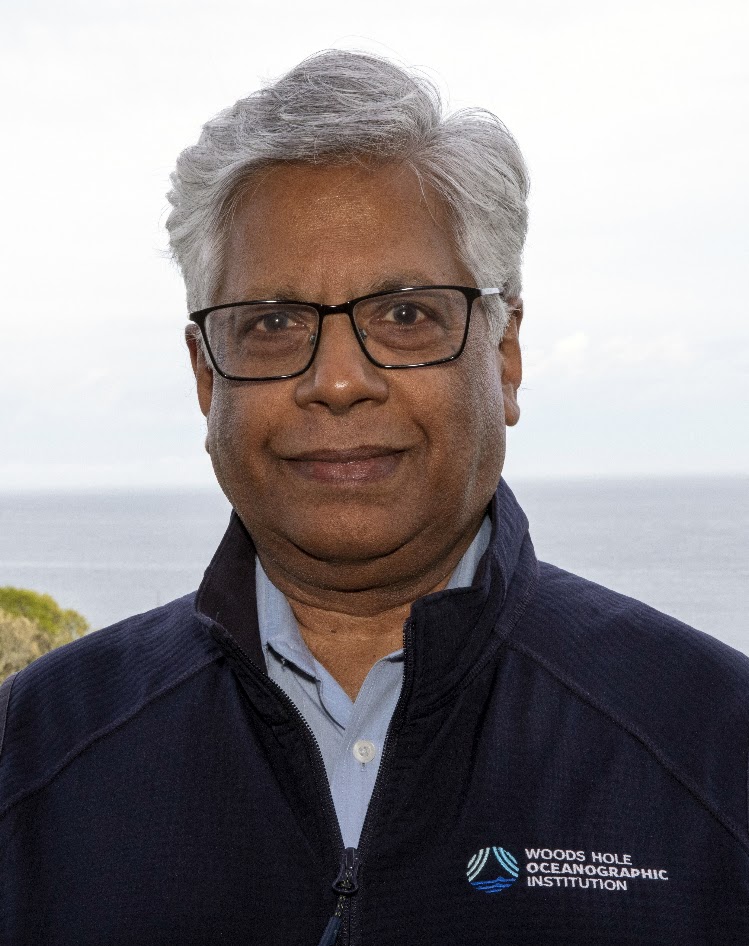
Kilaparti Ramakrishna
Director, Marine Policy Center, Woods Hole Oceanographic Institution
Pamela McElwee · Chair
Prof. of Human Ecology, Rutgers University
Robert Kopp
Robert Kopp
Dist. Prof. of Earth & Planetary Sci., Rutgers University
Neil Leary
Neil Leary
Dean’s Fellow, Dickinson College
Meenakshi Wadhwa
Meenakshi Wadhwa
Director, Scripps Institution of Oceanography, University of California-San Diego
Stacy-ann Robinson
Stacy-ann Robinson
Assoc. Prof. of Environmental Sciences, Emory University