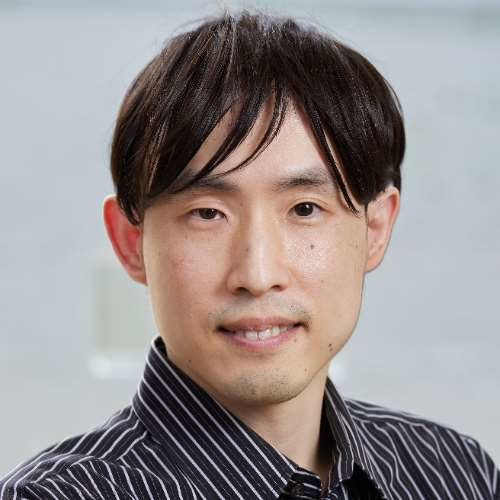
Yoshihide Wada will receive the 2018 Hydrologic Sciences Early Career Award at AGU’s Fall Meeting 2018, to be held 10–14 December in Washington, D. C. The award “acknowledges early career prominence and promise of continued contributions to hydrologic science.”
Yoshihide Wada represents a new breed of hydrologist, perfectly fitting the era of the Anthropocene. His pioneering work focuses on capturing the human footprint in the global hydrological cycle.
Yoshi developed a global hydrologic model that integrates human water use at much finer spatiotemporal resolutions, and with a stronger process base, than has been possible before. Using this model, he separated human impacts (water use, reservoirs, etc.) from natural climate variability in global runoff and identified the importance of groundwater resources in global water assessments, which previously lacked adequate attention. He carried out the first global quantitative assessment of groundwater use and depletion, the first global and regional assessments of transboundary groundwater stress, and a global assessment of how irrigation is maintained through unsustainable groundwater exploitation. His work on global groundwater depletion has fundamentally transformed world water assessments. He is the lead author of a landmark paper that estimated groundwater depletion globally and connected it to sea level rise and is a coauthor of the WG1 paper in the Intergovernmental Panel on Climate Change’s fifth and forthcoming sixth assessment reports.
With degrees from the University of Western Australia, the University of Tokyo, and Utrecht University, he has recently taken up a leadership position as deputy director of the water program at the prestigious International Institute for Applied Systems Analysis (IIASA), where he is directing numerous projects, for example, on establishing robust hydrological models that can be applied under different hydrological and societal settings worldwide, and on developing novel methods of stakeholder engagement whereby robust hydrological knowledge can be translated into informed policy development and governance.
In my opinion, Dr. Wada’s work represents some of the most important advances in the climate–water–society interface in recent years. He has changed our perceptions of how water interacts with human activities in the global hydrological cycle.
—Günter Blöschl, Vienna University of Technology, Vienna, Austria
I am deeply honored and grateful to be the recipient of this award. First and foremost, I would like to thank Günter Blöschl for his nomination and generous citation and for being an inspiration to me in many different ways. I am also deeply grateful to Murugesu Sivapalan, who has been a fantastic mentor over many years and has made me a better scientist and person. Moreover, I would like to thank Taikan Oki, Jay Famiglietti, Howard Wheater, Eric Wood, Bridget Scanlon, and Paul Dirmeyer for their strong support and encouragement throughout the nomination process and my career.
I come from a social science background, and I always wanted to bring the human dimension more into hydrology. My endeavor as a hydrologist started at Utrecht University with my mentors, Marc Bierkens and Rens van Beek. Majid Hassanizadeh and Ruud Schotting also taught me fundamental knowledge of hydrogeology. I am deeply thankful to Marc and Rens, who were always open and provided support when needed. Without their generous support, I would not be here today. Learning hydrology coming from social science was a unique career path, and it was challenging to bridge the interface between the social and natural sciences. However, I have truly enjoyed the experience, owing to our great hydrologic community with numerous forerunners, to whom I would like to dedicate this award for making my work possible and for accepting my new ideas and encouraging me to explore them further. The AGU hydrologic community is very open and accessible, and I am indebted to those who are continuously working to make our community better and to the honors committee for their voluntary service and strong devotion. I would also like to thank Peter Gleick for his pioneering work that always highlighted the importance of scientific contributions to policy making. He has always been my inspiration.
It is a real privilege to work at IIASA with passionate colleagues. Working together with scientists from different disciplines in a community-driven setting to increase community knowledge is something I would love to continue to pursue throughout my career.
—Yoshihide Wada, International Institute for Applied Systems Analysis, Laxenburg, Austria