

AGU is fighting for science.
Keep up with AGU’s latest news to be the first to know when new releases and updates go live.
Member Since 2012
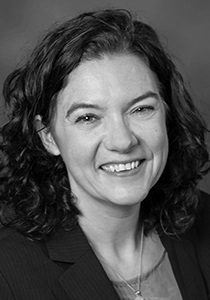
Valerie Trouet
Professor, University of Arizona
Member, Paleoceanography and Paleoclimatology Fellows Committee; Associate Editor, Geophysical Research Letters
Professional Experience
University of Arizona
Professor
Education
Doctorate
2004
Valerie's AGU Research

Filters
Clear All
Volunteer Experience
2022 - 2029
Associate Editor
Geophysical Research Letters
2026 - 2027
Member
Paleoceanography and Paleoclimatology Fellows Committee
2022 - 2022
Member
Ambassador Award Committee
Honors & Awards
Willi Dansgaard Award
Received December 2019
Valerie Trouet received the 2019 Willi Dansgaard Award at AGU’s Fall Meeting 2019, held 9–13 December in San Francisco, Calif. The award is given in recognition of “high research impact, innovative interdisciplinary work, educational accomplishments,...
Valerie Trouet received the 2019 Willi Dansgaard Award at AGU’s Fall Meeting 2019, held 9–13 December in San Francisco, Calif. The award is given in recognition of “high research impact, innovative interdisciplinary work, educational accomplishments, such as mentoring, or positive societal impact” and “exceptional promise for continued leadership in paleoceanography and paleoclimatology.”  
Citation

It is my great pleasure to introduce Valerie Trouet as the 2019 AGU Willi Dansgaard Award recipient. Valerie began her research career at Katholieke Universiteit Leuven in Belgium in 2004 and completed a postdoc at Pennsylvania State University and a research position at the Swiss Federal Institute for Forest, Snow and Landscape Research WSL. She is now an associate professor at the University of Arizona.

Valerie uses the environmental histories stored in long-lived trees to help answer some of the most pressing science questions in her field, involving a dizzying array of phenomena including atmospheric circulation, climate change, human history, wildfire, droughts, and tropical cyclones. Her productivity has been astounding, and her work is highly regarded. Many senior scholars in our discipline would be quite satisfied to have carried out as much insightful and impactful scholarship over the course of their entire careers as Valerie has undertaken in just the past decade. Highlights of her research include breakthrough papers on reconstructing movements of the jet stream and the Hadley circulation, climate impacts on society, and multiproxy paleoclimate approaches.

In addition to being a remarkable scientist, Valerie is a passionate and committed educator and science communicator. She has trained and mentored over a dozen postdocs and graduate students, several of whom are already carrying out groundbreaking research. Not content to confine herself to educating only within the classroom or laboratory, Valerie maintains an impressive schedule of invited presentations and media interactions and almost incredibly was able to write Tree Story, a popular book on tree rings, climate, and history!

She has also taken on a number of service and leadership duties for our discipline and in particular for the AGU community, where she serves as an editor for Geophysical Research Letters. Our discipline and AGU are very fortunate to have such an outstanding member, and she certainly merits recognition with the Dansgaard Award.

—Matthew Therrell, University of Alabama, Tuscaloosa

Response
I thank Matthew Therrell for his generous words and the nomination. We’ve come a long way since that police station in Mozambique. I also thank my other nominators and the Paleoceanography and Paleoclimatology award committee for their support. I am honored to receive the 2019 AGU Dansgaard Award and to join the trailblazers in paleoceanography and paleoclimatology who have received it before me. As a tree ring scientist, I work on much shorter timescales than many other paleoclimatologists, but at high resolution, with high replication, and with absolute dating. The reliable annual rhythm of tree rings grounds my research and inspires me to explore what trees can tell us about climate history, ecosystem history, human history, and the links between them. My research relies heavily on data gathered by others and contributed to public databases, such as NOAA’s paleoclimate database. Dendrochronological sampling, measuring, and cross-dating are sometimes frustrating, mostly fun—they are what attracted me to this field of science in the first place—but they are also hard work and time-consuming. I am very grateful to my fellow dendrochronologists (and other paleoclimatologists) who have shared their hard-earned data with the broader community. You are the giants whose shoulders so many of us stand on. I also thank my mentors, who taught me to think big while keeping a keen eye on detail. And I thank my colleagues—students, postdocs, and peers—for thinking, discussing, writing, and growing with me on this scientific adventure. Our trees are firmly rooted in the Earth, but the sky is the limit. —Valerie Trouet, University of Arizona, Tucson
See Details
Close Details