

AGU is fighting for science.
Keep up with AGU’s latest news to be the first to know when new releases and updates go live.
Member Since 1985

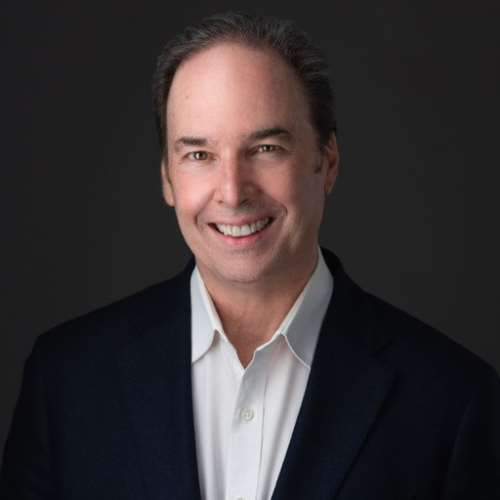
Jeffrey McDonnell
Distinguished Professor, University of Saskatchewan
Jeff McDonnell is a Distinguished Professor at the University of Saskatchewan (Canada) and Visiting Distinguished Professor at North China Water Resources and Electric Power University and also Ludong University (China). He is Visiting Chair in Water at the University of Birmingham (UK). He has been a member of the AGU since 1985. He has served previously as President of the Hydrology Section, chaired the section's AGU Fellows Selection Committee and the Nominations Committee.
Professional Experience
University of Saskatchewan
Distinguished Professor
2012 - Present
Oregon State University
Distinguished Professor and Richardson Chair in Watershed Science
2000 - 2012
Education
University of Canterbury
Doctorate
1989
Jeffrey's AGU Research
Filters
Clear All
Volunteer Experience
2019 - 2020
Chair
Hydrology Nominations Canvassing Committee
2019 - 2020
Immediate Past President
Hydrology Executive Committee
2017 - 2018
President
Hydrology Executive Committee
Honors & Awards
Robert E. Horton Medal
Received December 2025
Citation
Jeff McDonnell has transformed modern hydrology through field-based discovery, isotope tracer development, and theory building that has reshaped understanding of how catchments store, release, and route water. Across more than 50 instrumented basins on five continents, he has posed and answered foundational questions on the age, origin, and flow paths of streamflow.
His career is punctuated by landmark discoveries that have rewritten hydrological thinking and modeling. He discovered a mechanism for macropore export of isotopically old hillslope water, explaining the “old water” fraction of storm hydrographs. His “fill-and-spill” hypothesis showed that threshold runoff response is controlled by the filling and emergent connectivity of bedrock hollows, providing the first mechanistic lens on connectivity. He and his students established the first scaling relations for stream water age, showing that age reflects slope metrics and bedrock architecture rather than catchment size. He demonstrated “ecohydrological separation”—that trees use water pools not hydrologically connected to the stream—igniting global reevaluation of soil-plant-stream linkages.
McDonnell has been hydrology’s leading exponent of isotope tracers, coauthoring the field-defining textbook, writing the core reviews, and pioneering the use of age and isotope signatures as “soft data” in model evaluation, including the first model paper to use stream water age as a performance criterion. He has repeatedly advanced the field by forcing confrontation with field evidence, from his classic “Where Does Water Go When It Rains?” to the AGU Centennial synthesis proposing storage excess as unifying runoff theory. His “Beyond Water Balance” work and global analyses of groundwater age have catalyzed a new compartmentalized view of catchment water storage and release, inspiring new questions on critical zone structure and limits.
As a scientific citizen, McDonnell has led with vision—chairing IAHS-PUB, editing the five-volume Encyclopedia, and serving as president of the AGU Hydrology section. His mentorship has propagated a global tree of leaders, with 32 former researchers who are now professors. Winner of all major honors in field hydrology, including the International Hydrology Prize, John Dalton Medal, and election to the Order of Canada, Professor McDonnell stands as a singular force who has remade hydrology from the hillslope up and a deserving winner of the Robert E. Horton Medal.
—Murugesu Sivapalan, University of Illinois at Urbana-Champaign, Urbana, Illinois
See Details
Close Details
Union Fellow
Received January 2009
Horton Research Grant
Received January 1987