

AGU is fighting for science.
Keep up with AGU’s latest news to be the first to know when new releases and updates go live.
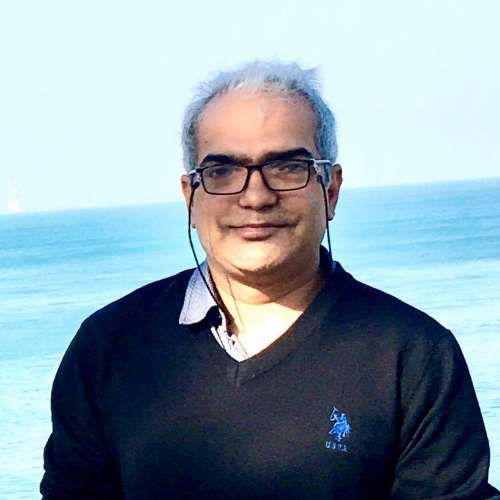
Member Since 2025
Parthasarathi Chakraborty
Head, CORAL, IIT Kharagpur
Prof. Parthasarathi Chakraborty is an expert in trace/toxic metal speciation, marine biogeochemistry, and environmental pollution research. He has played a leading role in advancing metal speciation studies in India, with research on the fate, bioavailability, and transport of metals in marine and estuarine systems. Through his research, he contributes to pollution control, deep-sea mining assessments, and climate change studies, with impacts on sustainable marine resource management and policy.
Parthasarathi's AGU Research
Filters
Clear All
Honors & Awards
International Award
Received December 2025
Citation
Professor Parthasarathi Chakraborty is recognized for his outstanding international contributions to marine chemistry, sustainable ocean management, and environmental equity. He is a global leader in advancing scientific knowledge and promoting sustainable practices through innovative research and applied solutions.
Professor Chakraborty’s pioneering work in metal speciation has transformed the study of trace/toxic metal dynamics in marine ecosystems. By establishing India’s first metal speciation laboratory, he has significantly advanced understanding of metal-ligand interactions, contributing to marine chemistry, toxicology, and ecosystem health. His research has advanced marine pollution management and contributed to global efforts to conserve ocean environments.
Professor Parthasarathi Chakraborty has made significant contributions to estuarine science, particularly in understanding the biogeochemical behavior of trace and toxic metals in estuarine environments. His research has advanced knowledge on the speciation, mobility, and bioavailability of metals across the land-ocean interface, providing critical insights into how natural and anthropogenic processes influence estuarine chemistry.
He has also explored how seasonal dynamics, salinity gradients, and sediment interactions control metal cycling, helping to explain the complex interplay between geochemical and biological factors in these transitional ecosystems. His pioneering studies have laid the groundwork for assessing pollution levels, ecological risks, and sediment-water exchange mechanisms in tropical estuaries.
Overall, Professor Chakraborty’s work has greatly enhanced scientific understanding of estuarine geochemistry and environmental health, contributing to strategies for sustainable management and conservation of coastal and estuarine systems.
As a leading authority on sustainable ocean management, he has conducted pivotal studies on polymetallic nodule mining in the Central Indian Ocean Basin. His research has provided vital insights into the ecological risks of mining and has informed global discussions on sustainable mining practices. His research on oxygen minimum zones has clarified how climate change–induced hypoxia affects metal toxicity, and his studies on mercury contamination in India’s estuaries and the Indian Ocean have guided efforts to clean up the water and ensure the safety of aquatic life. Professor Chakraborty has also developed innovative solutions with a patented filtration technology that removes microplastics from marine waters. He also bridges science and society by translating research into actionable insights for policymakers and communities. For example, he founded the SAMABATHY Welfare Society in 2016 to promote social equity and environmental justice.
Through his pioneering research, policy engagement, and commitment to community and capacity building, Professor Parthasarathi Chakraborty has made lasting contributions to marine science and sustainability. We deeply appreciate his transformative impact on science, society, and environmental stewardship.
—Swadhin Behera, Japan Agency for Marine-Earth Science and Technology, Yokohama, Japan
See Details
Close Details