

AGU is fighting for science.
Keep up with AGU’s latest news to be the first to know when new releases and updates go live.
Member Since 2025
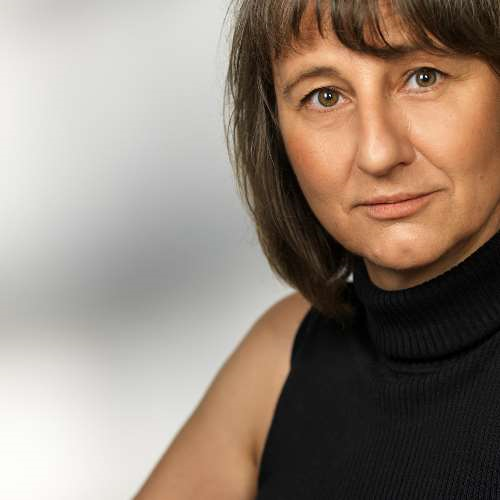
Monika Bright
University of Vienna
Monika Bright is a Professor at the University of Vienna, Austria. Monika received her Ph.D. in zoology and paleontology at the University of Vienna in 1992 and her habilitation in marine biology and zoology in 2001. Her research interests cover the ecology of marine animal communities and microbial–eukaryote mutualism from shallow waters to deep-sea hydrothermal vents .
Honors & Awards
Union Fellow
Received December 2025
Eunice Newton Foote Medal for Earth-Life Science
Received December 2025
Citation
Dr. Monika Bright’s scientific achievements have revolutionized the understanding of life in hydrothermal vent systems and advanced knowledge of fundamental Earth system processes. Her pioneering work increased scientific understanding of hydrothermal vent systems, how they are connected, and how life moves under the strata of the seafloor. Dr. Bright led an international team to explore how new hydrothermal vents were populated, hypothesizing that a teeming community of life was thriving below and traveling underneath the seafloor via fluid flowing into and out of Earth’s crust. After in situ experiments and creative use of a remotely operated vehicle’s manipulator arms, a hidden ecosystem was revealed, flourishing with life. This was a groundbreaking achievement: finding the presence of a thriving ecosystem within the sediments and cavities beneath hydrothermal vents! Dr. Bright’s work represents the discovery of an entirely new deep-sea habitat—life thriving not only above but also below the seafloor—adding a new dimension to the comprehension of deep-sea ecology, life’s origin and evolution at hydrothermal vents, and connection to Earth’s seafloor and subseafloor.
Dr. Bright’s career has been dedicated to unraveling the mysteries of giant tubeworms and their larvae, a foundational species at hydrothermal vents, including illuminating the complex symbiotic relationship between these worms and bacteria, sequencing their genomes, and explaining the mechanisms of the bacteria’s colonization inside the worm and its dispersal after death, providing critical insights into the coevolution and life cycle of these organisms. Her discoveries throughout her illustrious career have redefined the boundaries of habitable ecosystems, guiding future ocean exploration and research.
Dr. Bright was Austria’s first female professor of marine biology and today serves as the vice head of the Department of Functional and Evolutionary Ecology at the University of Vienna. Perhaps more importantly than her research outcomes, she is a mentor and inspiration for the next generation of marine biologists. Science education and outreach are important to Dr. Bright, and she is committed to advancing science communication to engage children in marine science. She received the Austrian Science Foundation’s Science Communication Award in 2006 for her educational outreach program and created Life in the Cracks of the Crust[TB13.1] for her expedition on R/V Falkor (too) to awaken students’ curiosity. Students participated in ship-to-shore connections hosted in English, German, Dutch, Slovenian, Portuguese, and Spanish. In 2015, she founded the Women in Biology Initiative at the University of Vienna to support other women scientists.
—Allison Miller, Schmidt Ocean Institute, Palo Alto, California
See Details
Close Details