

AGU is fighting for science.
Keep up with AGU’s latest news to be the first to know when new releases and updates go live.
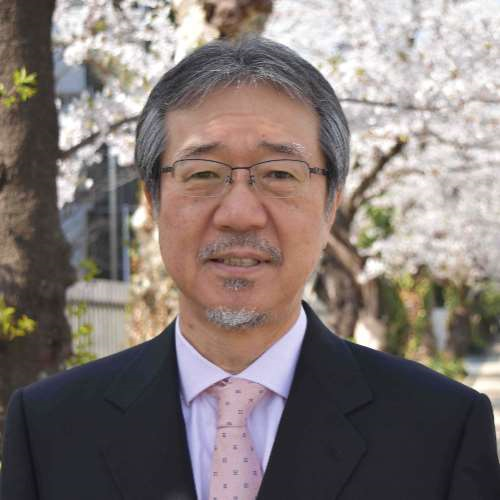
Member Since 1980

Hitoshi Kawakatsu
Earthquake Research Institute, University of Tokyo
Professional Experience
Earthquake Research Institute, University of Tokyo
2025 - Present
Earthquake Research Institute, University of Tokyo
Retired
2023 - Present
Institute of Earth Sciences, Academia Sinica
Visiting Professor
2021 - 2025
Earthquake Research Institute, University of Tokyo
Emeritus Professor
2021 - 2025
Show All Professional Experience
Show Less Professional Experience
Education
Stanford University
Doctorate
1985
University of Tokyo
Masters
1981
University of Tokyo
Bachelors
1979
Show All Education
Show Less Education
Hitoshi's AGU Research
Filters
Clear All
Volunteer Experience
2013 - 2014
Member
Flinn Award Committee
Honors & Awards
Inge Lehmann Medal
Received December 2025
Citation
Hitoshi Kawakatsu is an outstanding and pioneering scientist who has made seminal contributions on a wide range of problems in seismology and the deep Earth interior from the crust down to the inner core. He has made several breakthroughs during his career. For example, he discovered a new seismic discontinuity at 920 kilometers in the lower mantle, and the surrounding depth range is now considered to mark an important change in mantle convection characterized by ponding slabs and plumes. He has also made basic findings in oceanic plates, and working within an interdisciplinary approach, he proposed new models of the lithosphere-asthenosphere system and a clever interpretation in terms of a "mille-feuilles" model.
In subduction zones, using very dense broadband networks, he discovered a thin hydrated layer. This work had a very strong impact on our understanding of the dynamics of subducted slab and the transportation of water into the deep mantle. He was a pioneer in the development of volcano seismology via the installation of broadband seismometers, which had strong implications for volcano plumbing systems. He also made several important theoretical contributions to the representation and interpretation of seismic anisotropy. In the case of radial anisotropy, which requires five independent parameters, he proposed to replace the traditional but not physical “eta” parameter by a new parameter, “etaK,” now named the “Kawakatsu” anisotropic parameter. So he is able to identify and attack difficult issues, always being at the forefront of theoretical developments, applying his observational skills to high-quality seismic data, and, finally, providing original interpretations.
In addition to his scientific work, Hitoshi has been a mentor to numerous seismologists and a leader of the seismological community at the national and international levels. Following the success of his different seafloor experiments, he also played a leading role in the international coordination of ocean bottom seismometer experiments. He organized several workshops devoted to ocean bottom observations and lobbied hard for the idea of the large-scale "Pacific array."
So for all of his fundamental contributions to the understanding of the structure and dynamics of Earth, it is entirely appropriate that Hitoshi Kawakatsu receive the 2025 Inge Lehmann medal.
—Jean-Paul Montagner, Université Paris Cité, Institut de Physique du Globe de Paris, Paris, France
See Details
Close Details
Union Fellow
Received January 2012
Citation
For his outstanding contributions to the study of mantle discontinuity structure, earthquake sources as well as volcano seismology.
See Details
Close Details