

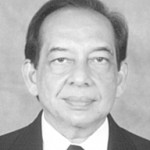
It is a great pleasure to introduce Harsh Gupta as the 2008 AGU Waldo E. Smith medalist. Gupta has made significant and innovative contributions in several areas of geosciences (seismology, tectonics, marine geophysics, geothermal resources). He is internationally known for his pioneering work devoted to characterizing earthquakes triggered by filling of artificial water reservoirs, discriminating them from normal earthquakes, and developing innovative mitigation procedures. He also had several major contributions on seismic and geodynamic processes at work in the Tibetan Plateau and Himalayan regions, the Bay of Bengal, and the Arabian Sea, as well as on characterization of seismic rupture zones of the Koyna and Latur stable continental regions.
Quite early in his career, it became clear that in addition to his impressive scientific credentials, Gupta also had a flair for scientific leadership. As the director at the age of 40 years, he was responsible for building the Centre for Earth Science Studies at Trivandrum (India), before taking over as the vice-chancellor of the Cochin University of Science and Technology. In 1983, he led the Indian scientific expedition to Antarctica and established the first permanent Indian base, “Dakshin Gangotri.” In the early 1990s, he served as advisor to the Department of Science and Technology, government of India, and took several national research initiatives to enable the Indian science community to participate in international programs. For about a decade, Gupta served as the director of the National Geophysical Research Institute (NGRI) in Hyderabad. Under his stewardship, NGRI rose to be the top geosciences research institute in India. Gupta’s visionary leadership led NGRI to use the pool of basic research capabilities to address the country’s needs in hydrocarbons, minerals, and groundwater resources, a crucial question for agriculture in India. In the recent past, serving as secretary to the government of India in the Department of Ocean Development, Gupta implemented several new programs, in particular, gas hydrate exploration, detailed mapping of the entire exclusive economic zone of India—hence preparing India’s legal claim for the continental shelf—and tapping the energy of the oceans for power generation as well as production of potable water for remote island communities. After the 2004 Sumatra earthquake, Gupta was responsible for designing and implementing a unique tsunami warning system for the Indian Ocean within record time. All of his leadership stints are marked by his extreme results-oriented approach that has helped him carry out diverse roles with great distinction and poise.
On the international scene, Gupta has demonstrated effective leadership capabilities through his long-standing involvement with renowned international organizations such as the International Union of Geodesy and Geophysics, the International Association of Seismology and Physics of the Earth’s Interior, and the International Council of Scientific Unions, in which he serves at the highest levels.
For his wide range of scientific contributions in the field of geophysics, his unique leadership in scientific policy, his numerous accomplishments to develop and promote geophysical research and its applications to societal needs in India, and his extraordinary services to geosciences communities in India and worldwide, Harsh Gupta is a most worthy recipient of the Waldo E. Smith Medal of the American Geophysical Union.
—ANNY CAZENAVE, Laboratoire d’Etudes en Géophysique et Océanographie Spatiales, Toulouse, France