

AGU is fighting for science.
Keep up with AGU’s latest news to be the first to know when new releases and updates go live.
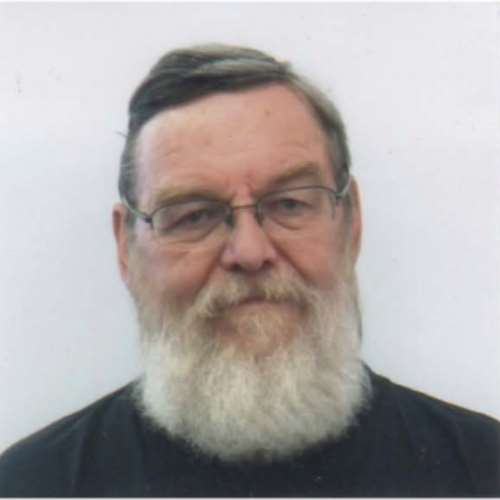
Member Since 2004

Ed R. Cook
Ewing Research Professor, Lamont Doherty Earth Observatory
Professional Experience
Lamont Doherty Earth Observatory
Ewing Research Professor
Education
University of Arizona
Doctorate
1985
Ed's AGU Research
Filters
Clear All
Honors & Awards
Roger Revelle Medal
Received December 2025
Citation
Dr. Edward R. Cook of the Columbia University Lamont-Doherty Earth Observatory has been awarded the Roger Revelle Medal for his development of tree ring reconstructed “drought atlases” that have revolutionized the study of long-term climate variability and change worldwide. No one has done more than Dr. Cook to give us a global picture of hydroclimate variations over the past two millennia, with annual resolution and accurate dating. He is unquestionably the leading dendrochronologist since A. E. Douglass, and arguably of all time.
The singular breakthrough accomplishment of Dr. Cook’s career has been the development of the North American Drought Atlas, which provided a direct and seamless extension of the instrumental record of soil moisture across the continent for 2,000 years. Drought atlases continue to be developed worldwide by Dr. Cook and now extend over all or portions of North America, South America, Australia and New Zealand, East Asia, Russia, Europe, the Middle East, and Africa. They are all based on tree ring chronologies that have been exactly dated to the calendar year, are reconstructed over latitude/longitude grids as finely spaced as 0.25°, and are verifiable against independent instrumental climate data, historical documentary evidence, and climate model simulations. The drought atlases have been published in the leading scientific journals of the world and provide spatial fields of soil moisture for each year—astonishing datasets that did not exist before Dr. Cook’s data and methodological innovations.
The atlases were made possible by Dr. Cook’s analyses but also by the massive data contributions of colleagues worldwide who hold him in the highest regard for his affability, mentorship, and novel statistical applications. The drought atlases have advanced our understanding of climate dynamics and have been used for the direct testing of hypotheses concerning the causes of climate variability and climate change, the role of oceans in coordinating hemispheric drought and pluvial regimes, the onset of anthropogenic megadrought, the socioeconomic impact of hydroclimate extremes, and the ecological interactions of drought, wildfire, and vegetation change. Dr. Cook has applied his visionary drought atlases to help solve long-standing problems in climate history, constituting a revolution in climate science that has made him one of the greatest contributors to the field of paleoclimatology.
—David Stahle, University of Arkansas, Fayetteville, Arkansas
See Details
Close Details
Union Fellow
Received January 2011
Citation
For his outstanding analytical contributions to tree ring research and paleoclimate reconstruction, which have provided compelling insights into drought and climate change.
See Details
Close Details