


“‘A man of genius makes no mistakes. His errors are volitional and are the portals of discovery.’ — James Joyce, Ulysses (1922).
“After collaborating with Scott Doney for the past 14 years I know what Joyce meant. When working with someone as bright as Scott it inevitably happens that you just don’t understand. And because we’re trained skeptics the question immediately arises, ‘has our friend and colleague made a mistake?’ But we’re wrong; we just didn’t see the portal through which people like Scott had already proceeded. Certainly this is what we reserve these awards of ‘outstandingness’ for; those whose insight lead through the portals of discovery.
“Where should I begin? Scott’s scientific talents are many and varied; go to any bibliographic database and search on ‘Doney,’you’ll find the fruits of his talents shining out from more than 40 (at last count) peer-reviewed journal articles and book chapters. Scott has displayed his prodigious talent in tackling topics of oceanographic interest such as: transient tracer measurement and modeling, oceanic ventilation time scale calculation, denitrification rate estimation, irreversible thermodynamic quantification of air-sea gas transfer, coupled physical-biological modeling dynamics, advances in upper ocean boundary layer modeling, diurnal cycling of photochemical species, ecosystematic modeling of biogeochemical processes, exploration of mesoscale variability in satellite data, global climate system modeling, trace-nutrient limitation of the global carbon cycle, the list seems to go on and on. The overarching theme of Scott’s research is his desire to better understand and model the response of the marine biogeochemical system to climate variability and to predict potential climatic feedbacks via the exchange of CO2 and other radiatively or chemically important gases between the atmosphere and ocean.
“Our collaboration began shortly after Scott came to the Woods Hole Oceanographic Institution as a newly minted Bachelor of Arts (magna cum laude) from the University of California, San Diego. This collaboration, which began at the white board, continues to this day.
“As part of his Ph.D. thesis in the MIT/WHOI Joint Program, Scott worked with Bill Jenkins on the distributions of transient tracers to infer the workings of basin scale circulation and water mass ventilation in the North Atlantic. This work with transient tracers resulted in a clear demonstration that the deep western boundary current is not a single ribbon of flow (as the popular press prefers to display), but, rather, a complicated system of recirculation cells that have enormous import for the implications of how climatically important, anthropogenic tracers (such as CO2) are stored in the deep ocean.
“After completing his thesis, Scott went inland and took up modeling global climatic systems at the National Center for Atmospheric Research, always with an eye to what the data are telling us. Scott and many of his colleagues are working to include, as realistic as feasible, ecosystem dynamics into physical models of all dimensionalities. Starting from simple models applied to the Bermuda area Scott’s coupled physical-biological ecosystem-based models have branched out from one-dimensional to two- and three-dimensional model frameworks of global and regional extent. This modeling activity has led to research using satellite data as one constraint on the patterns emerging. Using geostatistical techniques to quantify mesoscale variability, Scott has clearly demonstrated that this is a direct outgrowth of the interactions of physical and biological processes operating in the upper ocean.
“The above is just a small fraction of Scott’s scientific endeavor, so you might think Scott has no time for anything outside his scientific research. Not so. Scott gives back to our community enormous portions of his intellect and energy driven by an earnest desire to ensure that the insights we gain today are not lost tomorrow. He’s on more committees than I can remember (or think humanly possible); he teaches (upon request) at the University of Colorado, Boulder; and advises several postdocs at NCAR. All of these activities are full of a selfless, non-promoting drive to ensure that the younger scientists around him are encouraged and that we gain understanding of our world so that projections from climatic modeling are based on sound science.
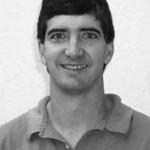
“Scott sees deeper into, knows more about, and synthesizes more significant oceanographic information than most oceanographers I know today. It is my great pleasure to present to you Scott C. Doney, the AGU James B. Macelwane 2000 medalist.”
—DAVID M. GLOVER, Woods Hole Oceanographic Institution, Woods Hole, Mass.